5 min read
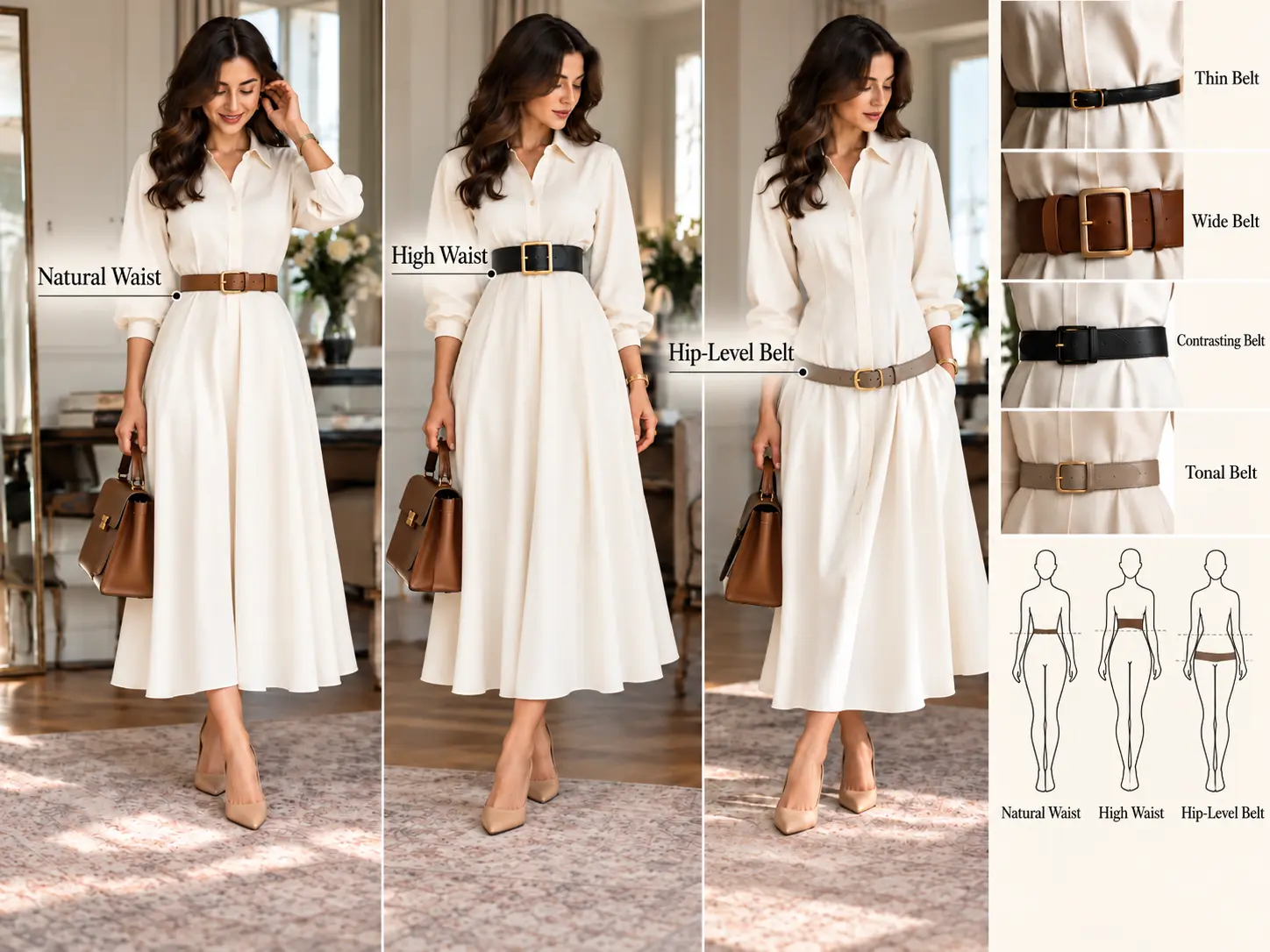
The same dress and belt can create noticeably different looks when the belt is positioned higher or lower. Belt placement creates a visual line that influences how we perceive the relationship between the torso and legs. Its effect also depends on belt width, color contrast, and the garment’s overall silhouette.
Article Content
A Belt Creates a Visual Division
In her book Communicating Fashion, researcher Marilyn Revell DeLong explains how lines in clothing influence the way we perceive body shape and the overall appearance of an outfit from head to toe.
A belt can define the waist, draw attention to it, or create a visual separation between the upper and lower sections of clothing.
However, these are visual effects, not actual changes to body measurements.
Where Should You Position Your Belt?
1. Natural Waist
The natural waist is generally located around the body’s natural narrowing between the rib cage and the hips.
Placing a belt here can visually emphasize and define the waist, particularly when styling dresses and garments made from flowing fabrics.
2. High Waist
When the visual waistline is positioned above the natural waist, the lower section of the outfit may appear longer, while the upper section appears proportionally shorter.
However, a high waist is not necessarily the same as an Empire Waist, which sits directly beneath the bust.
3. Dropped Waist
A dropped waist moves the visual dividing line downward toward the upper hips, making the torso area appear relatively longer.
This design approach is not new. Dropped-waist silhouettes were a prominent feature of 1920s fashion, as documented in the costume collections of The Metropolitan Museum of Art.
The important point: There is no universally correct belt position. The dress silhouette, torso length, skirt volume, and original seam placement all influence the final appearance.
What Do Belt Width and Color Change?
According to design principles published by Utah State University Extension, size and color contrast can help direct visual attention toward particular elements of an outfit.
A narrow belt: Generally creates a subtler visual line, especially when its color is close to that of the clothing.
A wide belt: Occupies more visual space and may make the waist a stronger focal point.
A contrasting belt: For example, a black belt worn over a light-colored dress creates a more noticeable color division.
A color-coordinated belt: Can create a softer visual transition between different sections of an outfit.
This does not mean that a wide belt always makes the body appear wider, or that a narrow belt is necessarily more flattering.
The result depends on the complete outfit design.
A Simple Mirror Experiment
Put on a simple dress and try positioning the belt in three different places:
- Slightly above your natural waist.
- Directly at your natural waist.
- Around your upper hips, if the dress silhouette allows it.
Take three photographs from the same distance and angle, then compare:
Where does the lower section of the outfit visually begin?
Where is your attention drawn first?
Which position works most harmoniously with the dress silhouette?
Next, try changing the belt’s width or color without changing its position.
You may discover that a belt is more than a decorative addition. It is a design tool that changes the visual arrangement of lines and proportions within an outfit.
“The position of a belt does not change your body… but it can change the way the proportions of your outfit are perceived.”
Your Style ᥫ᭡
Rana Elgogary
Expert Tip
«Before deciding where to position a belt, try it at different heights with the same outfit and take photographs from the same distance and angle. Compare the visual waistline, the balance between the upper and lower sections, and how well the belt complements the garment’s silhouette. Don’t choose a belt position simply because it follows a common styling rule… choose it because it creates the visual balance you want in your outfit. Your Style ᥫ᭡ Rana Elgogary»
Conclusion
A belt is more than an accessory; it is a design element that creates a visual line and can influence how an outfit’s proportions are perceived. Positioning it at the natural waist, above it, or toward the hips changes the visual relationship between the upper and lower sections of the clothing. Belt width, color, and contrast also influence where attention is directed. There is no single rule that suits every body shape, as the result depends on the garment’s silhouette, torso length, volume, and overall visual composition.