August 2026
•
185
Views
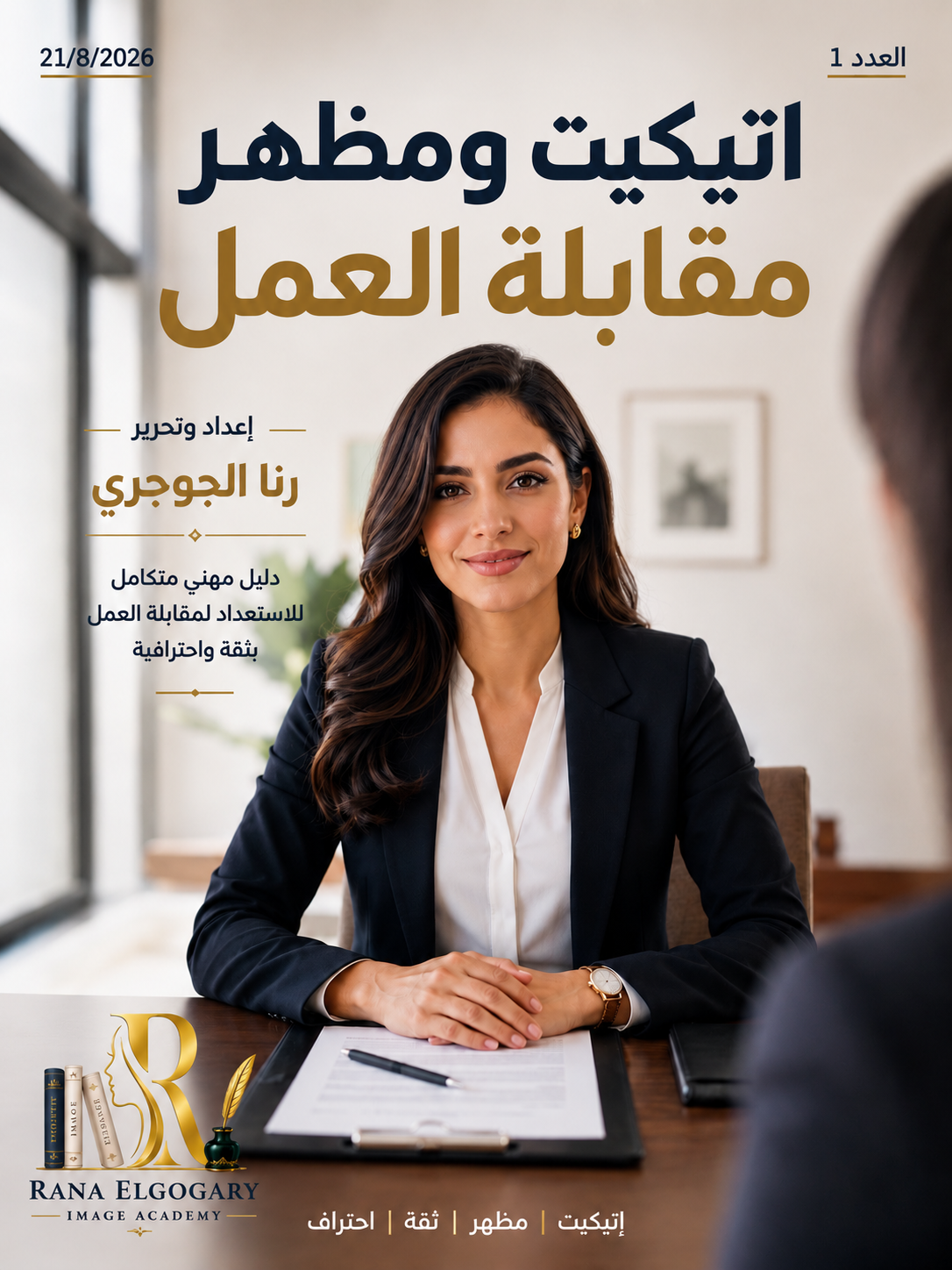
Job Interview Etiquette & Professional Appearance
This issue, titled “Job Interview Etiquette & Professional Appearance,” provides a comprehensive guide to managing a candidate’s professional presence, from preparing for the interview through to closing the conversation and following up afterward. It brings together professional appearance, communication, behavior, preparation, and the ability to demonstrate competence.
The issue begins by presenting the job interview as a two-way evaluation process between the candidate and the employer. It explains the key areas recruiters and interviewers seek to assess, including knowledge, skills, abilities, and the extent to which the candidate’s qualifications and experience align with the requirements of the role and the professional environment.
It then explores the essential stages of interview preparation, from researching the organization and understanding the job description to reviewing the résumé and preparing practical examples and evidence. This approach helps candidates demonstrate their competencies through real experiences rather than simply describing their skills.
The issue also presents a framework for selecting appropriate professional interview attire according to the industry, organizational culture, nature of the role, and expected level of formality. It explains the differences between formal professional environments, Business Casual, and creative industries, while also addressing personal grooming and the coordination of the hijab as an integrated element of a professional appearance.
The discussion then moves to professional presence and body language, communication with recruiters and interviewers, active listening, structuring answers, and avoiding unnecessary rambling. It also introduces behavioral interviews and the STAR technique, explaining how candidates can use it to organize their responses and transform skills and experience into real examples that demonstrate their contribution, competence, and results.
The issue addresses several common interview questions and situations, including “Tell me about yourself,” what to do when a candidate does not know an answer, how to speak professionally about a previous job or manager, and the questions candidates can ask to gain a clearer understanding of the role and the organization.
It also presents the interview from an HR perspective, helping readers understand what interviewers are seeking to evaluate through their questions and how a candidate’s answers may reveal their approach to thinking, analyzing situations, making decisions, and handling challenges—not merely the knowledge and experience they possess.
In addition, the issue highlights common mistakes that can weaken professional presence and discusses personal questions and legal boundaries, while clearly noting that the legal information presented relates specifically to the U.S. legal framework and should not be interpreted as a universal legal standard. It also covers virtual and recorded interviews, as well as how to close an interview and follow up professionally afterward.
Finally, the issue brings the key elements of professional interview presence together within one integrated framework:
Preparation ← Appearance ← First Impression ← Communication ← Demonstrating Competence ← Professional Conduct ← Awareness of Legal Boundaries ← Interview Closing & Follow-Up
The aim of this issue is to help readers enter a job interview better prepared to understand what they want to communicate, how to communicate it, and what they need to demonstrate, enabling them to present their experience, skills, and professional identity in a manner that is clear, balanced, natural, and convincing.
Issue Summary
This issue presents the job interview as a comprehensive professional experience that goes beyond simply answering questions. It encompasses preparation, professional appearance, communication, behavior, and the ability to demonstrate competence.
It provides readers with a practical framework for understanding what recruiters and interviewers look for, preparing for the interview in an organized manner, selecting an appropriate professional appearance for the organization, managing body language and conversation effectively, and presenting experience and skills through realistic and compelling examples.