5 min read
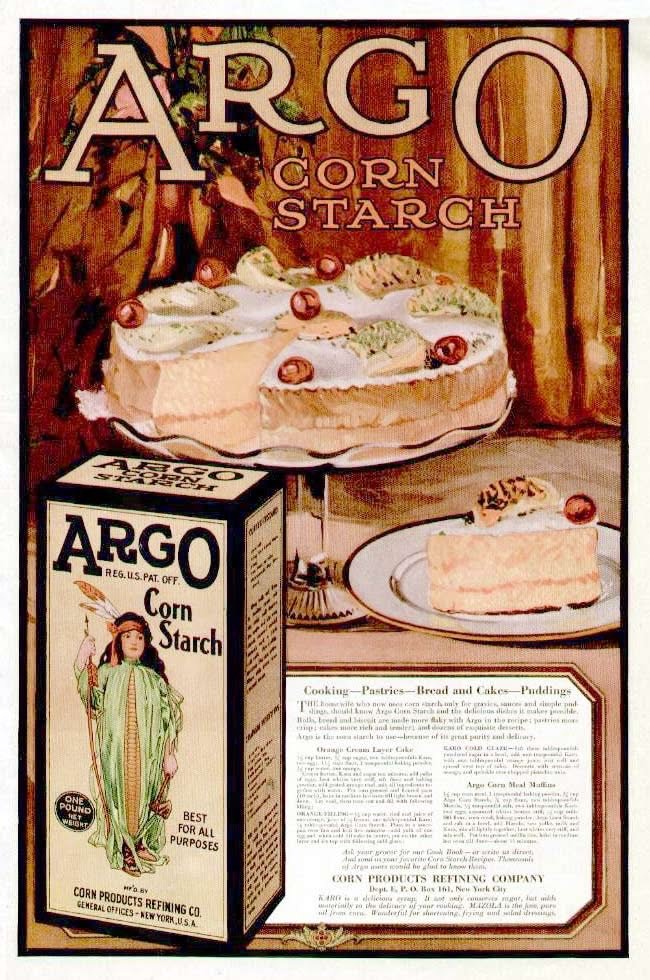
More than a century ago, an Argo Corn Starch advertisement did far more than display a box of starch. It presented an elaborate cake, recipes, and cooking ideas designed to show readers that cornstarch could be used in cakes, pastries, breads, puddings, and other dishes. This 1919 advertisement captures an early form of what we would now call content marketing: teaching consumers how to use a product while simultaneously selling it.
Article Content
The Cake Comes Before the Product
The most striking feature of the advertisement is the finished cake.
Instead of asking readers to imagine what Argo could produce, the advertiser shows the desired result first and places the package beside it.
The page then expands the message under the heading:
“Cooking—Pastries—Bread and Cakes—Puddings.”
Argo advertisements published in American magazines in 1919 similarly encouraged women to discover broader uses for cornstarch across sauces, breads, pastries, cakes, fillings, and desserts.
The goal was not simply to persuade consumers to buy starch.
It was to persuade them that starch belonged in more recipes.
Recipes as Advertising
This particular advertisement includes an Orange Cream Layer Cake, and a surviving archival-market record identifies the page as a 1919 Argo advertisement featuring that recipe.
Other Argo advertisements from the same year included recipes for dishes such as Orange Cream Pie, Parkerhouse Rolls, cream puffs, and éclairs.
Recipes were therefore not an incidental decoration.
They were part of the marketing strategy.
The company even invited readers to request its cookbook and, in some advertisements, to submit their own favorite cornstarch recipes.
Long before recipe websites and social media, brands were already using useful culinary content to build relationships with consumers.
A Brand With a Longer History
Argo’s official history dates the launch of Argo Corn Starch to 1892, following the incorporation of the Nebraska corn-milling operation that became Argo Manufacturing in 1891.
In 1899, Argo and several other starch businesses merged into the United Starch Company, a predecessor of the Corn Products Refining Company whose name appears at the bottom of the advertisement.
Why Cornstarch Works
Modern food science helps explain the practical function behind the recipes.
When cornstarch is heated in the presence of water, starch granules undergo gelatinization, changing structure and contributing to viscosity and texture. Researchers Wajira S. Ratnayake and David S. Jackson at the University of Nebraska–Lincoln studied this process in detail.
The University of Illinois Extension also explains that cornstarch is a common thickening agent and has greater thickening power than ordinary flour because flour contains components other than starch.
So while the page is clearly an advertisement, the ingredient itself has genuine functional roles in food preparation.
More Than a Century Later
The medium has changed.
Printed recipes became websites.
Cookbooks became social feeds.
Magazine demonstrations became short videos.
But the marketing principle remains recognizable:
Don’t merely tell consumers what your product is—show them what they can do with it.
In 1919, Argo did this with a beautifully illustrated cake and printed recipes.
Today, a brand might do the same thing in a thirty-second video.
“More than a century ago, recipes were already doing what content does today: offering value first and making the product a natural part of that value.”
Memories of Days Gone By ᥫ᭡
Rana Elgogary
Expert Tip
«When you look at a vintage advertisement, ask: “Was it simply selling the product—or teaching people a new way to use it?” Sometimes a product’s success comes not only from what was invented… but from a brand’s ability to help people see more possibilities in something they already had. Memories of Days Gone By ᥫ᭡ Rana Elgogary»
Conclusion
This 1919 Argo Corn Starch advertisement comes from a period when the brand was promoting cornstarch for a wider range of home cooking, including cakes, pastries, breads, puddings, sauces, and desserts. Recipes and cookbooks became tools for teaching consumers new ways to use the product. The page is also an early example of what we now call content marketing: providing useful information or a recipe rather than relying solely on a direct sales message.