5 min read
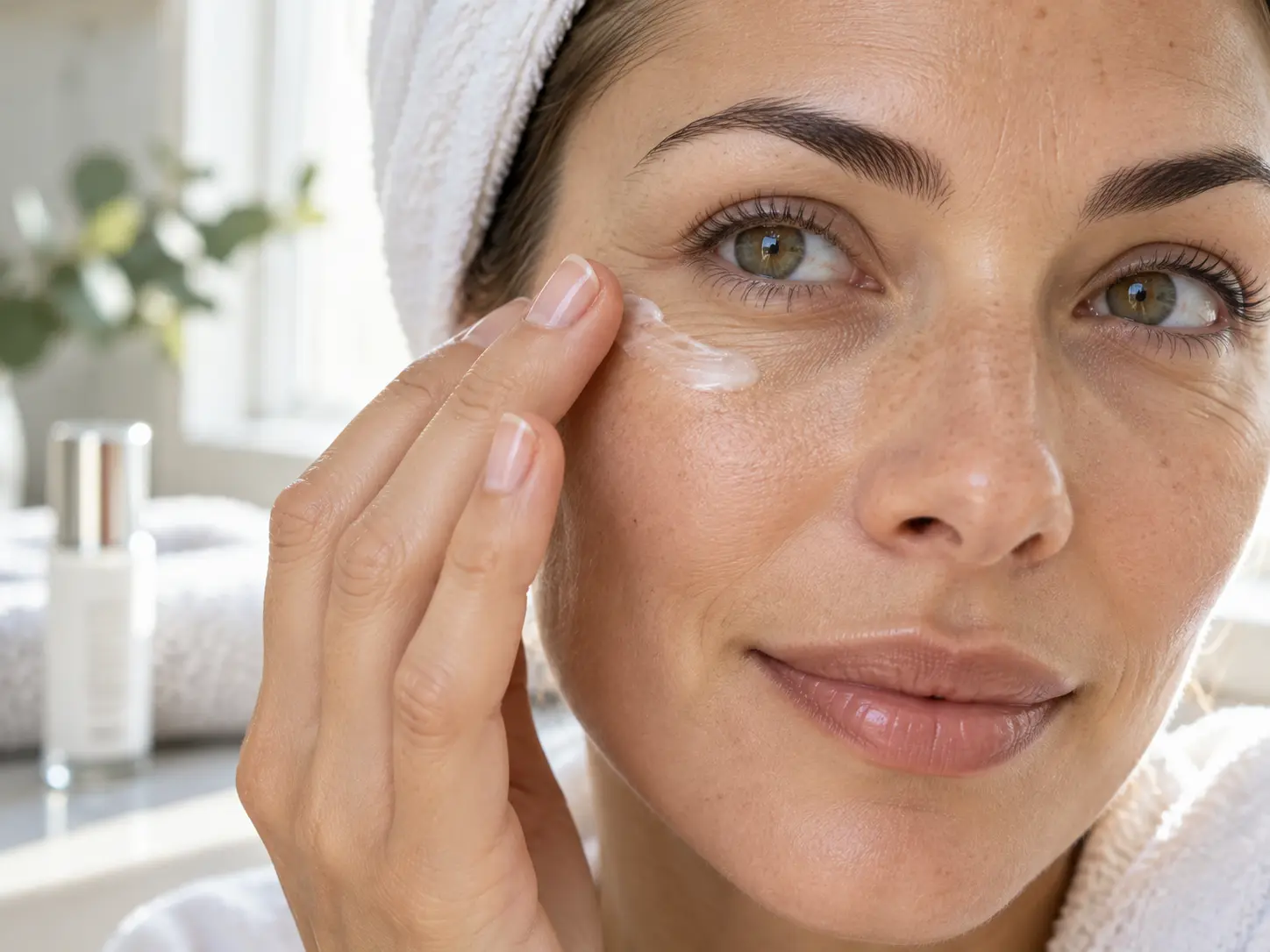
Dark circles, puffiness, and fine lines can all appear around the eyes, but they do not have the same causes. Some products can improve hydration, soften the appearance of superficial fine lines, and modestly improve certain types of pigmentation or puffiness. They cannot, however, replace lost volume, remove protruding fat, or erase deep structural wrinkles. The most important step is therefore not finding the “best eye cream.” It is identifying what you are actually trying to treat.
Article Content
Why Is the Eye Area Different?
Eyelid skin is among the thinnest skin on the body and has very little underlying subcutaneous fat. This anatomy helps explain why changes beneath the skin and fluid accumulation can become particularly visible around the eyes.
The American Academy of Dermatology also notes that the delicate skin around the eyes can readily develop contact dermatitis from skin-care and anti-aging products.
Therefore, the strongest formula is not necessarily the best formula for this area.
Tolerability matters.
Dark Circles Are Not One Condition
Scientific reviews classify under-eye dark circles into several broad causes:
pigmentary,
vascular,
structural,
and mixed.
Structural circles may result from hollows and shadows, while pigmentary circles involve melanin; vascular and mixed patterns have different contributing factors.
Mayo Clinic also lists genetics, eczema, contact dermatitis, rubbing the eyes, aging, pigmentation changes, and sun exposure among common contributors. What appears to be a dark circle may sometimes actually be a shadow cast by puffiness or an age-related hollow.
This explains why one eye cream may modestly help one person and do very little for another.
What Can Topicals Do for Dark Circles?
If pigmentation contributes to the problem, certain topical ingredients may help.
Mayo Clinic notes that ingredients including caffeine, kojic acid, and vitamin K have some supporting evidence for modestly improving the appearance of dark circles.
A 2024 review of topical therapies also found potentially beneficial results from several ingredient classes, although study designs and formulations varied considerably.
The important phrase is:
improve the appearance.
A topical cream cannot eliminate a shadow created primarily by deep structural hollowing.
What Can’t a Dark-Circle Cream Fix?
If a tear trough or volume loss is creating the darkness, topical products cannot replace that missing volume.
A systematic review in Dermatologic Surgery found that structural dark circles related to volume loss respond more appropriately to structural treatments such as fillers or fat grafting in selected patients, while significant skin laxity may require surgical approaches.
A brightening cream cannot remove a shadow created by anatomy.
What About Puffiness?
Mayo Clinic explains that under-eye puffiness can be influenced by fluid retention, aging, inadequate sleep, allergies, genetics, and weakening tissues that allow orbital fat to become more prominent.
This means temporary morning puffiness is different from a persistent structural eye bag.
Cool compresses can temporarily improve mild puffiness.
Caffeine-containing products have some encouraging evidence, but the evidence base is relatively limited. One small controlled study involving only 11 women reported improvements from a caffeine-and-vitamin-K eye pad, illustrating why promising results should not be interpreted as proof that caffeine can eliminate every form of under-eye puffiness.
What Can’t a Cream Do for Eye Bags?
A topical cream cannot remove protruding orbital fat or reconstruct lax supporting tissues.
Mayo Clinic notes that persistent structural bags may require medical or surgical options, including blepharoplasty, depending on the underlying cause and the individual patient.
The American Academy of Dermatology similarly cautions that creams cannot truly lift deeply sagging skin; topical firming effects are generally subtle.
Fine Lines: Where Topicals Can Be Helpful
Moisturizers can trap water in the skin, making superficial fine lines appear softer and the skin look temporarily plumper.
The AAD considers moisturizer and sunscreen fundamental anti-aging products and specifically notes that moisturization can make fine lines less noticeable.
That is an improvement in appearance, not permanent removal of the wrinkle.
Hyaluronic Acid
Topical hyaluronic acid is primarily useful as a hydrating ingredient.
An anti-wrinkle cream study found improvements in wrinkle depth and skin tightness after three months, but the researchers explicitly noted that the study design could not prove that hyaluronic acid itself caused those improvements.
Topical hyaluronic acid and injectable hyaluronic-acid filler are therefore not equivalent treatments.
Retinol and Retinoids
The American Academy of Dermatology states that retinoids can improve mild fine lines, pigmentation irregularities, and skin texture.
Eye-area studies have also shown improvement with retinoid-containing formulations, although some of these studies are small and open-label, so their findings should not be generalized to every retinol eye cream on the market.
Retinoids can also irritate sensitive or dry skin, making gradual and appropriate use particularly important around the eyes.
“Softens Fine Lines” Is Not the Same as “Removes Wrinkles”
The U.S. FDA makes an important distinction.
A cosmetic that makes wrinkles appear less visible through moisturization is making a cosmetic claim. A product claiming to remove wrinkles or change the structure or function of skin may cross into drug or medical-device claims under U.S. law.
Marketing language therefore matters.
“Reduces the appearance of fine lines” is not the same claim as “removes wrinkles.”
Expensive Does Not Automatically Mean Better
The AAD specifically cautions that a higher price does not necessarily mean a more effective skin-care product.
A useful eye product should be selected according to:
the concern being treated,
the relevant ingredients,
skin tolerance,
and consistent use.
The words “eye cream” on a jar are not evidence that one formula can treat every concern around the eyes.
Sun Protection Still Matters
UV exposure contributes to skin aging and pigmentation.
The AAD recommends daily broad-spectrum sunscreen with SPF 30 or higher as a foundation of anti-aging skin care.
Sun protection is also considered an important component of managing pigment-related periorbital darkening.
More Products Can Make the Area Look Worse
Persistent burning, redness, itching, scaling, or swelling should not be interpreted as proof that an active ingredient is “working.”
The AAD warns that irritation can make signs of aging appear more noticeable and that combining too many anti-aging products can increase irritation.
The FDA advises stopping eye-area cosmetics that cause irritation and seeking medical advice if irritation persists.
A Sensible Eye-Area Routine
A practical routine does not require numerous products.
Begin with gentle cleansing, appropriate moisturization, and daily broad-spectrum SPF 30+ protection.
Then add a targeted ingredient only when there is a clear reason for using it.
The goal is not to treat every possible concern at once.
It is to use the least complicated routine that addresses your actual concern without irritating the area.
Before Buying an Eye Cream, Identify the Problem
Instead of asking:
“What is the best eye cream?”
ask:
“What exactly am I looking at?”
Dryness and superficial lines may respond to moisturization.
Pigmentation may respond to appropriate topical ingredients and sun protection.
Temporary puffiness may improve with cooling and attention to its cause.
A structural hollow cannot be filled with cream.
Protruding fat or substantial laxity cannot be removed by a topical product.
“A good eye cream does not need to promise that it can change everything. Its real value lies in understanding exactly what it can improve—and what lies beyond the ability of a cream.”
Your Beauty & Care ᥫ᭡
Rana Elgogary
Expert Tip
«Before buying another eye cream, don’t ask only: “What does this product promise?” Ask: “What is causing my concern—and can a topical product scientifically affect that cause?” Moisturizer may soften the appearance of a fine line. It cannot fill a hollow. A brightening ingredient may improve pigmentation. It cannot remove a shadow created by anatomy. Better eye-area care begins with understanding the problem—not with choosing the biggest promise on the jar. Your Beauty & Care ᥫ᭡ Rana Elgogary»
Conclusion
Dark circles, puffiness, and fine lines around the eyes do not share one cause. Dark circles may be pigmentary, vascular, structural, or mixed, and in some cases apparent darkness is largely a shadow created by an under-eye hollow. Topical products can improve hydration and the appearance of some fine lines and may modestly help certain forms of pigmentation or puffiness. They cannot restore structural volume, remove protruding fat, or truly lift deeply lax tissue. Effective eye-area care therefore begins by identifying the problem before choosing the product.