5 min read
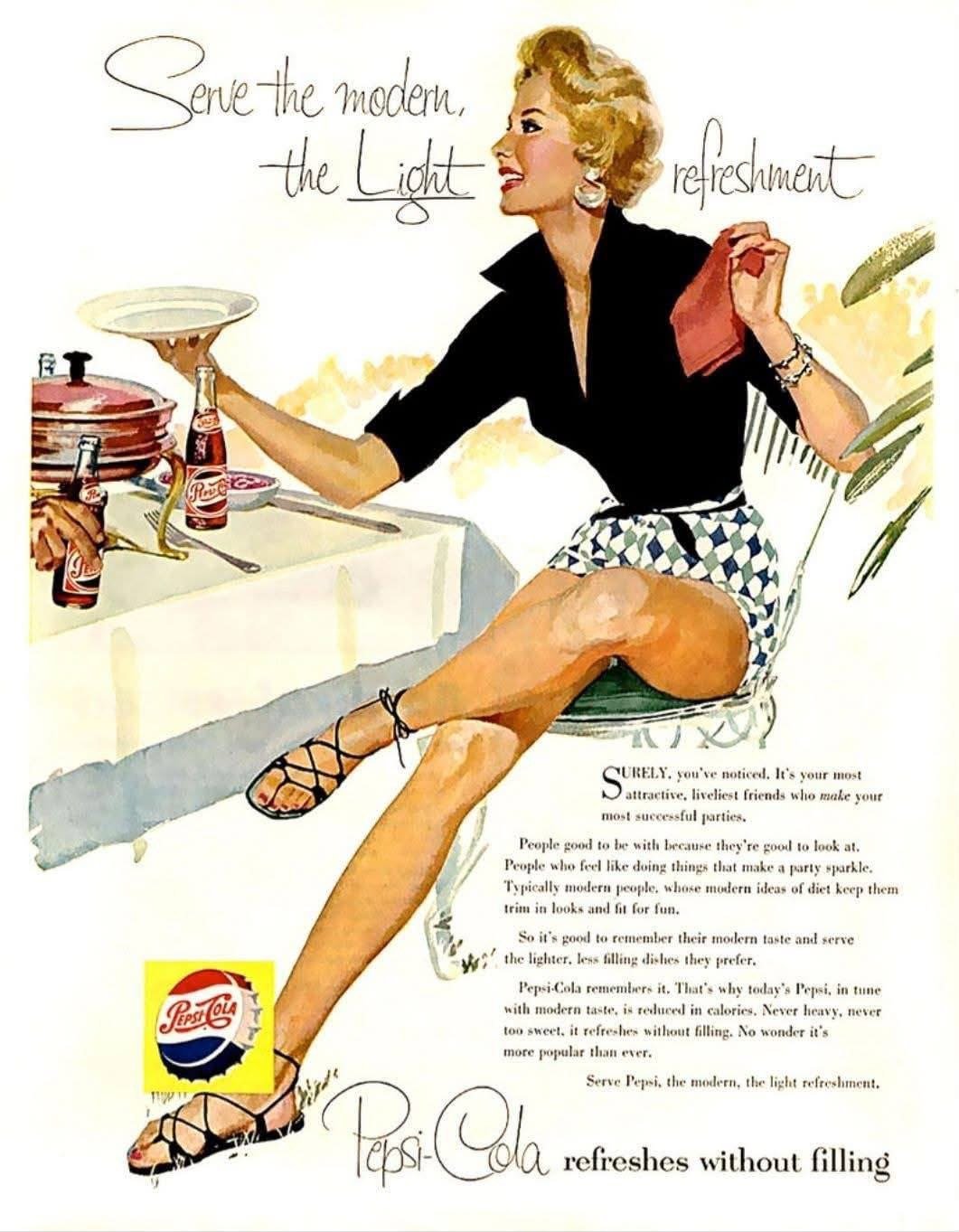
An elegantly dressed woman hosts her guests, Pepsi bottles sit on the table, and the advertisement announces: “Serve the modern, the Light refreshment.” This 1956 advertisement wasn’t simply presenting a soft drink. It connected Pepsi with a broader image of modernity, slimness, entertaining, lighter eating, and an active social life. What, then, did being “modern” look like in advertising seventy years ago?
Article Content
Pepsi in 1956… When “Light Refreshment” Became an Image of Modern Living
Short Description
An elegantly dressed woman hosts her guests, Pepsi bottles sit on the table, and the advertisement announces:
“Serve the modern, the Light refreshment.”
This 1956 advertisement wasn’t simply presenting a soft drink. It connected Pepsi with a broader image of modernity, slimness, entertaining, lighter eating, and an active social life.
What, then, did being “modern” look like in advertising seventy years ago?
Pepsi in 1956… When “Light Refreshment” Became an Image of Modern Living
At first glance, the illustration seems simple.
An elegant woman sits beside a table, holding a plate as though preparing to entertain guests.
But the headline makes a much larger promise:
“Serve the modern, the Light refreshment.”
At the bottom:
“Pepsi-Cola refreshes without filling.”
The advertisement wasn’t merely saying:
Drink Pepsi.
It was suggesting:
This is the drink that belongs to modern life.
What Did “Modern” Mean?
Look beyond the bottle.
The carefully styled woman, fashionable clothing, social setting, entertaining, and references to lively, attractive people all create a particular image.
The advertisement brings together:
style + slimness + activity + sociability + modernity.
Pepsi is then positioned inside that lifestyle.
It demonstrates an enduring advertising principle:
Don’t sell only the product. Connect it to a life the consumer might want to imagine themselves living.
Why Was “Light” So Important?
During this period, Pepsi advertising repeatedly used “The Light Refreshment” positioning.
Contemporary advertisements referred to a trend toward lighter, less-filling food and drink and described Pepsi at the time as reduced in calories, never heavy, and never too sweet.
But “light” was doing more than describing the drink.
It suggested an entire lifestyle:
lighter,
modern,
active,
stylish.
One word had moved from being a product description to becoming a lifestyle description.
The Woman’s Role Matters Too
The woman isn’t merely drinking Pepsi.
She appears to be choosing and serving it.
The advertisement discusses successful parties, lively friends, and the kind of refreshment a modern hostess should provide.
This tells us something about how women were addressed by advertising in this period.
Consumption was connected not only to personal taste, but also to hosting, appearance, the home, and social presentation.
The Body Message Is Hard to Miss
Read through a modern lens and another theme becomes obvious: slimness.
Pepsi advertisements from the same period repeatedly connected lighter eating and drinking with slender bodies and active modern living.
That makes vintage advertisements valuable social documents.
They don’t simply tell us:
What were companies selling?
They can also reveal:
What kind of person did advertisers believe consumers wanted to become?
Here, “modern” was closely associated with being stylish, active, sociable, and slim.
Today, we can examine that message rather than simply accept it.
Selling Identity Alongside the Product
Notice how little of the advertisement’s visual space is devoted to explaining the beverage itself.
Instead, we see the woman, fashion, entertaining, friends, appearance, and modernity.
Pepsi becomes part of that world.
Advertising still uses this technique today.
A brand doesn’t always say:
“Buy this because it performs this function.”
It often suggests:
“This belongs to the kind of life you want to live.”
What Has Changed in Seventy Years?
Fashion has changed.
Packaging has changed.
Advertising language has changed.
And the way we discuss women, bodies, and health has evolved as well.
But one fundamental idea remains:
Advertising still sells meaning alongside products.
Today, a product may be connected with sustainability, creativity, freedom, athleticism, simplicity, or success.
In this advertisement, the word carrying much of that meaning was:
Modern.
Why Is This Advertisement Worth Remembering?
Not simply because it shows how Pepsi advertised in 1956.
It shows us how modern life itself was being pictured.
An elegant woman.
Entertaining at home.
Friends.
Slimness.
Lighter food.
And a beverage presented as belonging naturally within that world.
Seventy years later, we can ask:
Was the advertisement selling a bottle of Pepsi?
Or was it selling an image of the person the consumer might want to become?
Perhaps it was selling both.
“Vintage advertisements preserve more than the appearance of old products… they also preserve images of the lives brands once encouraged people to dream about.”
Memories of Days Gone By ᥫ᭡
Rana Elgogary
Expert Tip
«When you look at a vintage advertisement, don’t ask only: “What product does this advertisement want me to buy?” Also ask: “What kind of person—or life—is it asking me to want to become?” The product may be the most visible object in the advertisement… but the dream surrounding it may be the real message. Memories of Days Gone By ᥫ᭡ Rana Elgogary»
Conclusion
This advertisement belongs to Pepsi’s mid-1950s “Light Refreshment” era, when the brand used the idea that Pepsi could “refresh without filling.” Contemporary advertisements also described the product as reduced in calories and connected it with lighter eating and drinking. Yet the campaign sold more than a beverage. It connected Pepsi with a broader vision of modernity, style, slimness, entertaining, and active social life. Vintage advertisements therefore offer more than product history. They allow us to examine the values, aspirations, and identities used to persuade consumers in another era.